Coast Guard finds debris from missing Bermuda-to-Boston medical jet off Nantucket
A Gulfstream air ambulance carrying six people — a patient, a relative and four Canadian crew members — vanished early Saturday over the Atlantic. By nightfall the Coast Guard had confirmed a debris field matched the missing aircraft; none of the six has been found.

A medical transport jet carrying six people from Bermuda disappeared over the Atlantic early Saturday as it approached the Massachusetts coast, plunging more than two miles in under three minutes before vanishing from radar. By Saturday night, the U.S. Coast Guard said it had located a debris field in the waters south of Nantucket that investigators confirmed belonged to the missing aircraft. None of the six people aboard had been found.
The aircraft, a twin-engine Gulfstream G100 registered C-GRJP and operated by the Ontario-based carrier Latitude Air Ambulance, left L.F. Wade International Airport in Bermuda shortly before midnight Friday on a roughly two-hour medical evacuation flight to Boston Logan International Airport. It never arrived.
A plunge from 24,000 feet
According to a timeline reconstructed from flight-tracking data and radio transmissions reviewed by CBS News, the jet was cruising normally at roughly 24,000 feet for more than an hour after takeoff. Shortly after 1 a.m., an air traffic controller asked the pilot to confirm whether the flight was declaring an emergency; the reply was largely unintelligible. In air traffic control recordings obtained by the Boston Globe, a controller can be heard asking, "You're coming in blind? Is that what you said?" moments before the exchange broke down entirely.
Within minutes, the aircraft began a rapid, uncommanded descent, dropping roughly 13,000 feet in under three minutes. Both radio and radar contact were lost around 1:06 a.m., with the jet's last known position about 80 miles south of Nantucket. The Federal Aviation Administration issued a search-and-rescue alert at 1:20 a.m. and notified the Coast Guard shortly before 2 a.m. that it had lost contact with the flight.
Coast Guard crews searched more than 1,600 square miles of open ocean over roughly 27 hours before confirming, Saturday night, that a debris field they had located belonged to the missing jet. The search drew on a wide array of federal assets, including:
- An HC-144 Ocean Sentry and an HC-130 Hercules fixed-wing aircraft flying overlapping search patterns
- An MH-60 Jayhawk helicopter crew conducting low-altitude sweeps
- A 47-foot motor lifeboat and the fast response cutter William Sparling working the surface search through the night
The debris turned up in waters off an island whose surrounding shoals and currents are well documented; the shoal-studded waters off the Massachusetts coast have long complicated both navigation and recovery efforts, and officials have not said how deep the debris field lies. Overnight sea conditions were being monitored by ocean buoys south of the island that federal forecasters use to track conditions in the search area.
Six people, three nationalities
Latitude Air Ambulance said the flight was a routine medical evacuation: a patient and a family member being flown from Bermuda to a Boston-area hospital, accompanied by two pilots and two medical crew members, according to NBC News. Officials said the group included four Canadian nationals — the crew — and two Bermudian nationals, the patient and a relative. The jet itself was built in 1996 and has flown for Latitude since 2018; the Hamilton, Ontario-based carrier, as the CBC reported, has flown similar cross-border medevac routes for years without a prior fatal incident.
Agencies converge on a cause
Responsibility for the investigation is now splitting along jurisdictional lines. Under a standing agreement between the two agencies, the Coast Guard retains authority over the search-and-rescue mission itself, while the National Transportation Safety Board is expected to take the lead on determining what caused the aircraft to lose contact and descend once wreckage is formally recovered. Because the jet was Canadian-registered, the Transportation Safety Board of Canada is also involved; the aircraft's maintenance and airworthiness records fall to Transport Canada, which regulates the aircraft's home registry. The FAA's loss of contact with the flight triggered the same alerting process the agency uses nationwide, a reminder of how reliant oceanic and coastal flight tracking remains on the nationwide radar and radio network the Federal Aviation Administration maintains.
Reaction, and what comes next
The disappearance has drawn official reaction from three governments. Canadian Transport Minister Steve MacKinnon said in a statement that "my thoughts are with everyone on board, as well as their families, loved ones and colleagues during this incredibly difficult time." Bermuda's premier, David Burt, said his "thoughts are with everyone on board and their families during this deeply worrying time."
"You're coming in blind? Is that what you said?"
That brief, unanswered question — put to the pilot by an air traffic controller in the minutes before the jet vanished — has become the starkest trace of what happened aboard the aircraft. In Massachusetts, Governor Maura Healey pledged state resources to support the search, and emergency crews were staged on a runway at Logan Airport for much of Saturday in case the flight still managed to land.
As of Sunday morning, the Coast Guard said its search for the six people aboard would continue even after the debris field was confirmed. Recovering wreckage from the ocean floor is likely to take considerably longer than the search itself, and investigators will need the aircraft's flight-data and cockpit-voice recorders, if recoverable, to determine why the jet lost power or control systems and began its fatal descent. Investigations of this kind typically take months to produce even a preliminary account.

Stalled storms trigger flash flooding across Gulf Coast from Alabama to Florida Panhandle
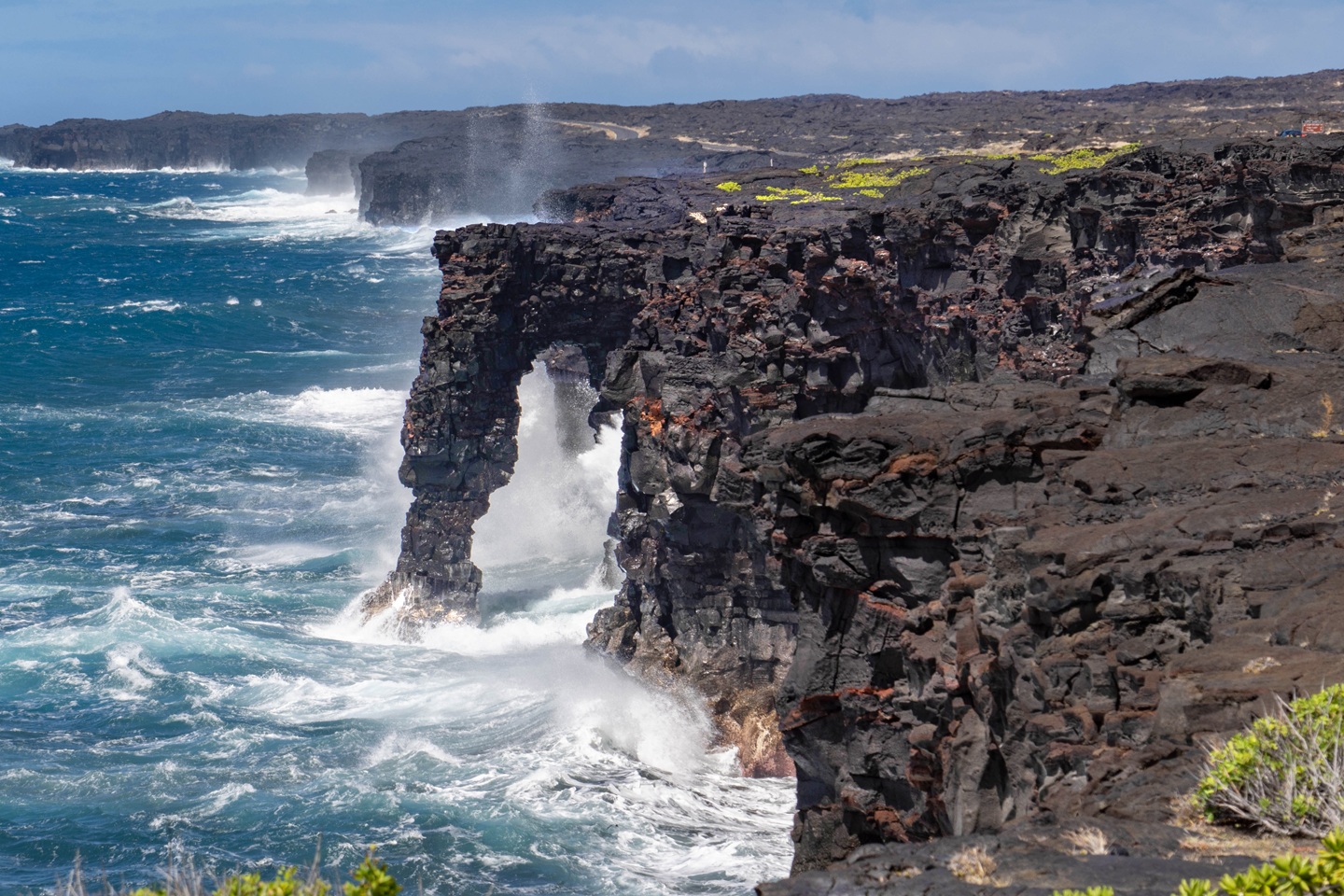
Centuries-Old Hawaii Sea Arch Collapses Into the Pacific After Storm-Battered Summer

New Jersey Fines Microsoft-Linked AI Data Center $1.07 Million Over Illegal Generators
