Scientists May Have Solved the 40-Year Mystery Behind Uranus and Neptune's Lopsided Magnetic Fields
A new computer-simulation study suggests that electrical conductivity deep inside the ice giants, not an ancient collision, produces their wildly tilted, off-center magnetic fields — and hints the fields could still be shifting today.

For forty years, the magnetic fields of Uranus and Neptune have defied explanation. Where Earth's magnetic field forms a tidy, dipole shape tilted a modest 11 degrees from its spin axis, the ice giants' fields are tilted at wild angles, offset from the planets' centers, and shaped nothing like a simple bar magnet. A new study led by researchers at the University of Texas at Austin proposes an answer: extreme electrical conditions deep inside the two planets, rather than any one-off catastrophe in their history, generate the distorted fields — and may still be reshaping them today.
The paper, titled "Electrical conductivity structure drives anomalous and potentially time-varying magnetic fields at Uranus and Neptune," was published Nov. 3 in the journal Communications Physics and has drawn fresh attention from science writers this month, including detailed accounts in Space.com and Universe Today. The lead author, Chi Yan, is a research associate at the University of Texas Institute for Geophysics, part of the Jackson School of Geosciences, which announced the findings earlier this month. Her co-authors include planetary scientists at UCLA and at Northumbria University in the United Kingdom, with funding from the UT Institute for Geophysics, NASA and the UK's Science and Technology Facilities Council.
A Four-Decade Mystery
Only one spacecraft has ever visited either ice giant. NASA's Voyager 2 flew past Uranus in January 1986, returning the now-familiar, near-featureless pale blue-green portrait of the planet, then flew past Neptune in August 1989. Its brief flybys remain the only direct measurements scientists have of either planet's magnetic environment, and what Voyager 2 found was strange. Uranus's magnetic field is tilted 59 degrees from its rotation axis and is centered not on the planet's core but roughly two-thirds of the way out toward its surface. Neptune's field is similarly disordered, tilted about 47 degrees and centered about halfway between the core and the cloud tops.
Researchers had speculated that Uranus's skewed field might trace back to the collision thought to have tipped the planet onto its side — its rotation axis is tilted a dramatic 97 degrees, so that it effectively rolls around the sun rather than spinning upright. That explanation runs into a problem, however: Neptune's field is just as lopsided, with no evidence that Neptune ever suffered a comparable sideways blow. Whatever distorts the fields, the new paper argues, must be built into the physics of ice giants generally, not an accident of Uranus's particular history.
Water Under Pressure
Planetary magnetic fields are generated by a dynamo: the churning motion of an electrically conductive fluid inside a rotating body. In Earth's case, that fluid is molten iron in the outer core, and the resulting field is a clean dipole with well-defined north and south poles. Uranus and Neptune have no comparable iron-dominated core. Instead, they are built mostly from water, ammonia, methane, hydrogen and helium layered around a probable rocky center, and each is more than 14 times as massive as Earth.
That extra bulk creates crushing pressures and temperatures deep inside the planets. "Deep inside Uranus and Neptune, pressures and temperatures become extremely high," Yan said in the Jackson School statement. "Under those conditions, which can cause water molecules to break apart into ions, the material may become increasingly electrically conductive with depth." Working from that assumption — that electrical conductivity rises the deeper one goes into the planet — Yan's team ran dynamo simulations across a range of interior configurations. The resulting models reproduced the lopsided, off-center field structures that Voyager 2 actually measured at both planets, without needing to invoke a collision or any other one-time event.
Fields That May Still Be Shifting
The simulations carried a second, more unsettling implication: the ice giants' magnetic fields may not be fixed in place. According to the models, a planet's magnetic tilt can swing by tens of degrees within just a few decades during some phases of the dynamo's behavior, while barely moving during others.
"Earth's magnetic tilt drifts by only a degree or so over 50 years," Yan said. "Our models show the ice giants can behave very differently. In some stretches, the tilt swings by tens of degrees within decades. In others, it shifts only slightly over the same span."
If the models hold up, the Voyager 2 measurements from the 1980s — the only direct readings scientists have ever obtained — may no longer describe the planets' current magnetic configurations at all. That would complicate efforts to understand not just the ice giants' deep interiors but also their auroras and how well their magnetic bubbles shield nearby moons, some suspected of harboring subsurface oceans, from space radiation.
Testing the Idea from Afar
With no spacecraft currently near either planet, researchers are left looking for indirect evidence. One avenue is the James Webb Space Telescope, which has imaged faint infrared auroras glowing above both Uranus and Neptune. Co-author Tom Stallard of Northumbria University has led that observing campaign. Because auroras form where a planet's magnetic field funnels charged particles into the upper atmosphere, their location and shape can reveal how the field is currently arranged.
"We are busy working on what's contained within these observations, but the shape and structure of the aurora, as well as other weird patterns in the ionosphere, promise to provide us with a way of understanding how the magnetic fields have changed — an important stepping stone," Stallard said, according to Space.com's account of the research.
The plan, the researchers say, is to combine the JWST auroral images with the archival Voyager 2 magnetic-field data and the new dynamo simulations to estimate what the fields look like today and whether they have genuinely shifted since the 1980s. A definitive answer will likely have to wait for a dedicated mission: NASA's most recent planetary science decadal survey has prioritized an orbiter and probe to Uranus, while China's Tianwen-4 mission, set to launch toward Jupiter in 2029, is expected to send a smaller probe onward to Uranus by way of a gravitational slingshot. Until a spacecraft arrives, the ice giants' magnetic fields — and whatever is happening to them right now — will remain largely a matter of inference.
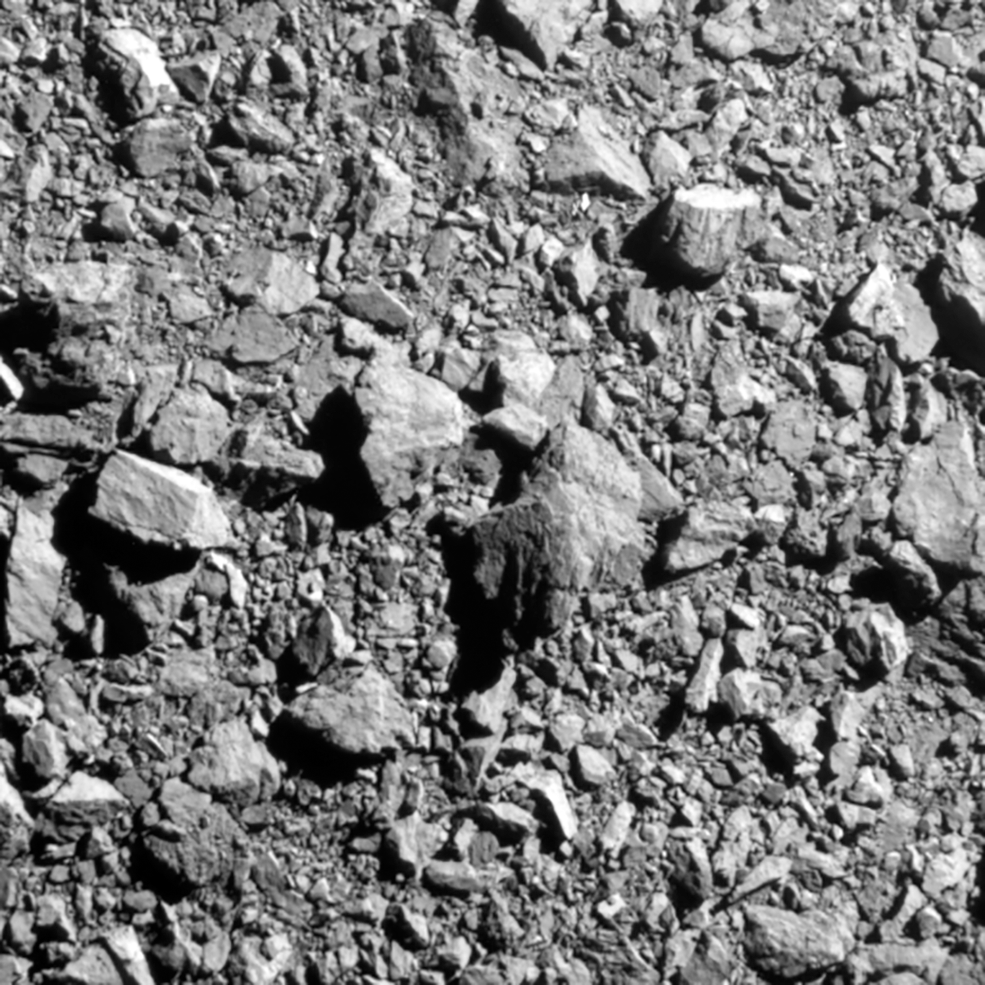
Europe's Hera Probe Sends Back First Close-Up Images of Asteroid DART Deliberately Struck

Thousands of tiny animals found living inside deep-sea mining's target rocks
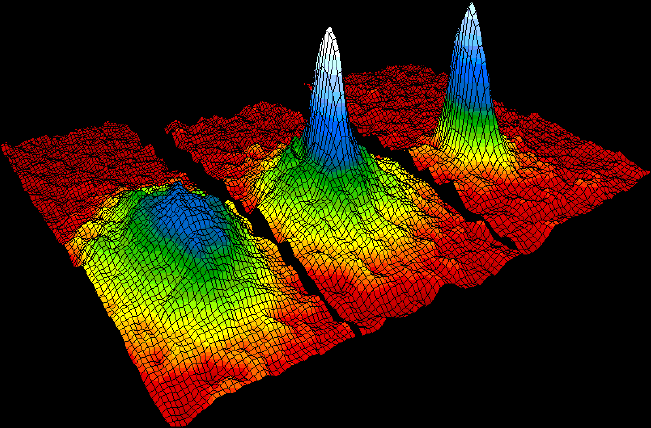
Cambridge physicists capture first 3D images of a decaying quantum vortex tangle
