Flu season arrives early as a mutated H1N1 strain drives hospitalizations to a 15-year high for this point in the year
Federal surveillance data show influenza hospitalization rates higher than at any point since 2010 for this time of year, as a mutated strain of H1N1 first detected in Japan last spring now accounts for nearly all circulating flu in the United States.
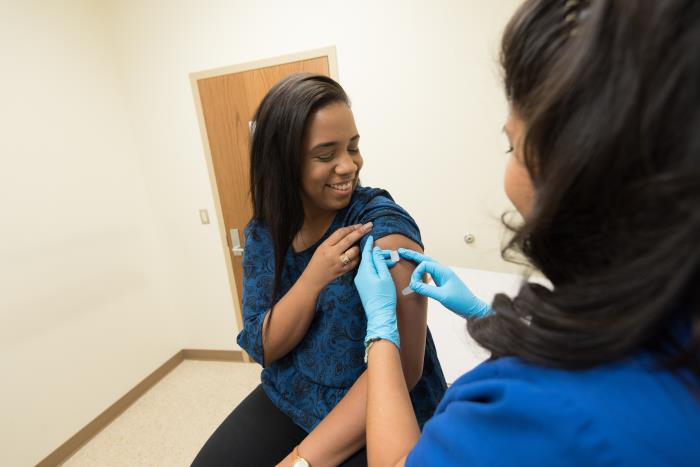
Federal health officials say the United States is heading into an unusually early and active flu season, with influenza hospitalization rates for this point in the calendar higher than at any time since 2010 and a mutated strain of H1N1 that emerged in Japan last spring now driving the vast majority of cases.
The Centers for Disease Control and Prevention's weekly influenza surveillance report, covering the week ending October 24, found that the hospitalization rate for that point in the calendar was the highest recorded for that week since the 2010-11 season. The agency's FluSurv-NET system logged a weekly rate of 1.3 hospitalizations per 100,000 people, an estimate CDC says will likely rise to between 1.9 and 2.5 once delayed reports are accounted for. The cumulative hospitalization rate for the season so far stands at 3.9 per 100,000. Separately, the CDC's hospital-reporting network recorded 6,100 laboratory-confirmed influenza admissions nationwide that week, up from the week before.
CDC's season-to-date estimates, still preliminary, put the toll at roughly 1 million illnesses, 16,000 hospitalizations and 900 deaths. Nearly all of the circulating virus is one subtype: of 371 influenza A viruses subtyped by public health labs that week, 367, or 98.9 percent, were A(H1N1)pdm09. CDC also confirmed the season's first pediatric death, in a child whose illness was linked to that H1N1 strain, during the week ending October 10.
A mutation first detected in Japan
Researchers tracking the virus say the surge traces to a specific genetic change. Samuel Scarpino, a professor of public health at Northeastern University and executive director of its Institute for Experiential AI, has been studying the mutation, known as G155E, which alters a surface protein the virus uses to attach to and infect cells. "This H1N1 variant appears to be behind the current surge and the early start," Scarpino said, in an interview published by Northeastern University.
The mutation was first identified in Japan in May and spread gradually through the summer, contributing to a roughly sevenfold year-over-year jump in flu patients per clinic there by early October, school closures included. In the United States, the same lineage now accounts for the vast majority of circulating influenza A, according to CDC's weekly reports, which showed H1N1 making up more than 80 percent of subtyped flu A viruses since late May.
Scarpino said the mutation appears to hit younger adults and teenagers harder than older generations, for reasons tied to how immune systems first learn to recognize flu viruses. "Our immune responses to flu are shaped by the first strains we encounter as children," he said, explaining that people whose earliest flu exposure came after the 2009 H1N1 pandemic may have weaker natural defenses against a mutation that targets a site their immune systems were trained to watch.
Older adults still carry the heaviest burden
Despite that generational wrinkle, CDC's age-specific data show the hospitalization rate remains highest by far among adults 65 and older, at 13.3 per 100,000 that week, compared with 4.2 for ages 50 to 64 and roughly 1 to 3 per 100,000 for younger age groups. The agency's data also show hospitalization rates running higher among non-Hispanic Black patients than other racial and ethnic groups this season. Reporting on the season's first pediatric death noted that children with underlying medical conditions, along with pregnant people and anyone with a weakened immune system, remain the groups most likely to face severe illness.
An analysis of the preceding week's CDC data found outpatient visits for flu-like illness still below the seasonal baseline even as hospital admissions and test positivity climbed, a pattern consistent with a season that is arriving early rather than one that has already peaked. Metropolitan areas reporting moderate flu activity roughly tripled, from eight to twenty-five, in a single week in mid-October.
Health officials push vaccination before the holidays
The CDC's 2026-27 season guidance still recommends an annual flu vaccine for everyone 6 months and older, with children aged 6 months through 8 who have not previously been vaccinated needing two doses. The FDA required manufacturers to update all three vaccine components this year, including the H1N1 component, and projects manufacturers will supply up to 135 million doses, about 99 percent of them free of the preservative thimerosal.
CDC says preliminary laboratory testing suggests this season's vaccine should still recognize the mutated H1N1 strain, though the agency has not yet published a formal effectiveness estimate and says it is too early to know how well the shot will perform against it. Last season's vaccine, aimed primarily at a different, H3N2-driven surge, was only about 30 to 40 percent effective at preventing doctor visits and hospitalizations, according to Scarpino, a reminder that even a partially effective vaccine prevents large numbers of severe cases; he pointed to the 2022-23 season, when roughly 30 percent effectiveness was estimated to have still prevented more than 70,000 hospitalizations and about 3,700 deaths.
"Influenza causes a significant number of hospitalizations and deaths, so we should be taking this very seriously."
That assessment came from Neil Maniar, director of Northeastern University's master of public health program, who argued that an early start to the season makes prompt vaccination more urgent, not less. Protection takes about two weeks to build after a shot, he noted, which is part of why officials are urging people to get vaccinated now rather than waiting for the usual pre-Thanksgiving rush. "Going into the holidays, that means you'll have built up some immunity," Maniar said.
What comes next
CDC's FluSight forecasting model projects influenza hospital admissions and the share of emergency-department visits tied to flu will keep climbing through the week ending November 14. Officials caution that an early rise does not by itself predict how severe or how long the season will ultimately run; similar early starts in past seasons have sometimes flattened out and sometimes accelerated into significant winter waves. CDC said it will continue tracking the genetic diversity of circulating H1N1 viruses, noting more variation among samples this year than it has typically seen at this stage of a season, and will update its effectiveness estimates once more data accumulate over the winter. For now, the agency's message to the public has not changed from its standard seasonal advice: get vaccinated, and do it soon.

New York City Marathon runner's death highlights rare muscle-breakdown disorder

Brad's kale chips recalled nationwide after FDA confirms thallium contamination
A child's measles death in rural New York is the state's first in 30 years
